Showing posts with label History. Show all posts

Friday, April 21, 2017

Ancients: Mesopotamia

We are using History Odyssey Level 2 and our study of Mesopotamia included the Sumerians, the Hittites, and the early Babylonians.

History Odyssey suggests keeping a notebook divided into sections, such as Summaries, Men & Women, Inventions, etc.  where you add the information from each section.  There are dictation sentences, definitions, and short answer questions.  I have the kids do these activities, but we don't add them to a notebook.  

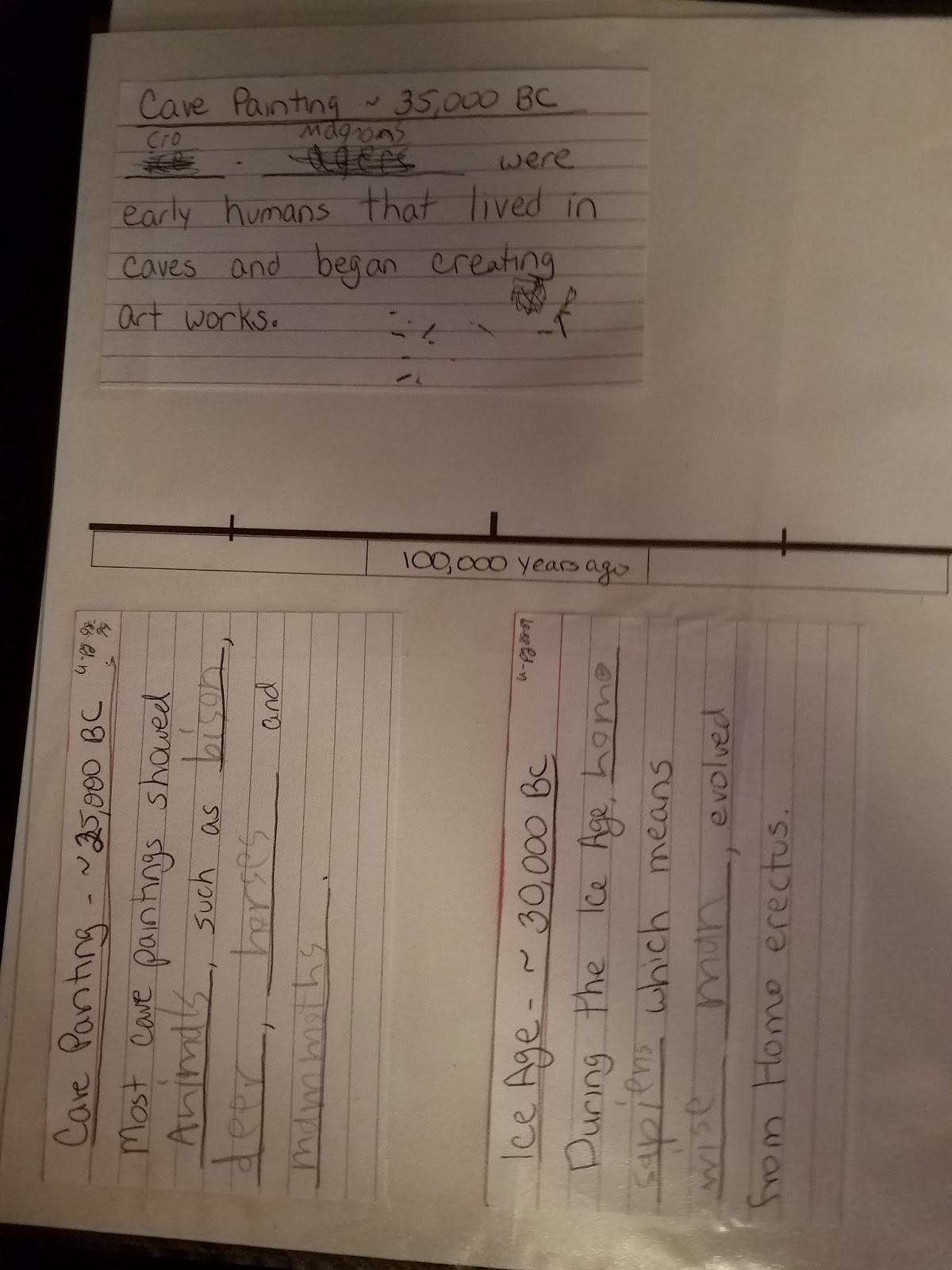
Squidy answers the questions as outlined in History Odyssey, from the Kingfisher Encyclopedia.  I make up additional questions for Vicki, from the Usborne Encyclopedia.  They both answer the questions on index cards and we add them to our timeline book.   I was glad to see that this time (unlike our previous unit on first civilizations) there was plenty of room in our timeline book.  Our study of Mesopotamia actually stretched out across approximately 2000 years.
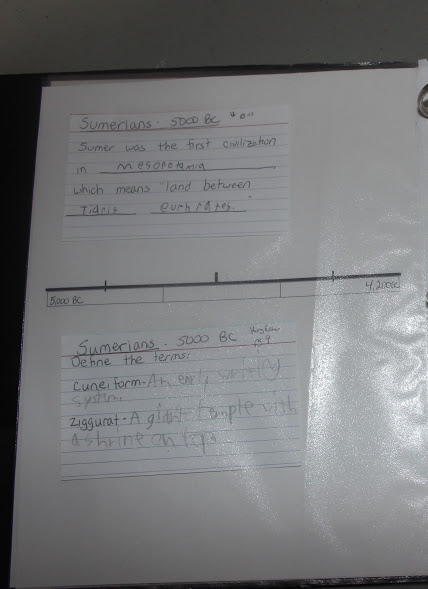


We learned about how the Sumerians were the first to develop a written language, called cuneiform, and gave it a try ourselves.   Vicki wrote her name in cuneiform.


We used air-dry clay and popsicle sticks to create our tablets.   We discussed the advantages and disadvantages of cuneiform and stick/clay versus our alphabet and pencil/paper.  

They thought that pencil/paper was definitely easier, although the clay was "cleaner" to start all over again (just ball it up and flatten it out again).  Obviously, the clay would last longer.   We also discussed how the straight lines of cuneiform were much easier to put into clay than curved letters like S would be.  

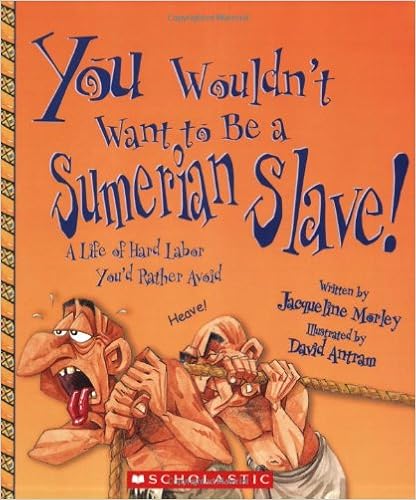
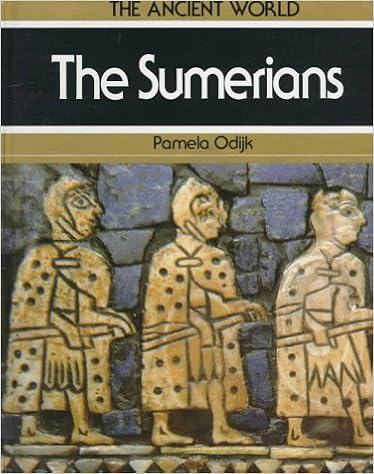
We picked our books based on what was available at our local library or through the Epic reading app.  Our Sumerian selections: 

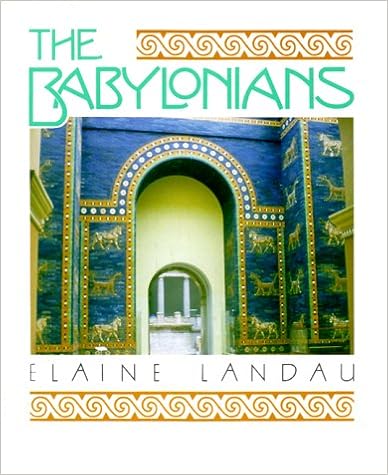
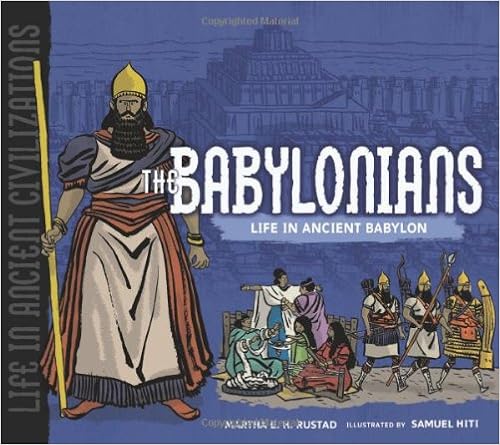
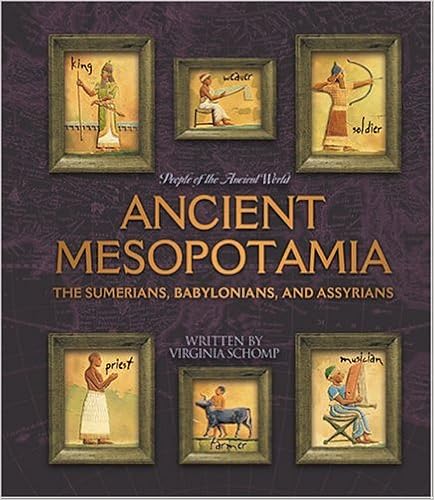
We read about the Hittites and the Babylonians:

and the kids read about Mesopotamia on Kids Discover.  I had them answer questions from the Teacher's Guide while they went through the units.  This way I could be sure they were paying attention. 
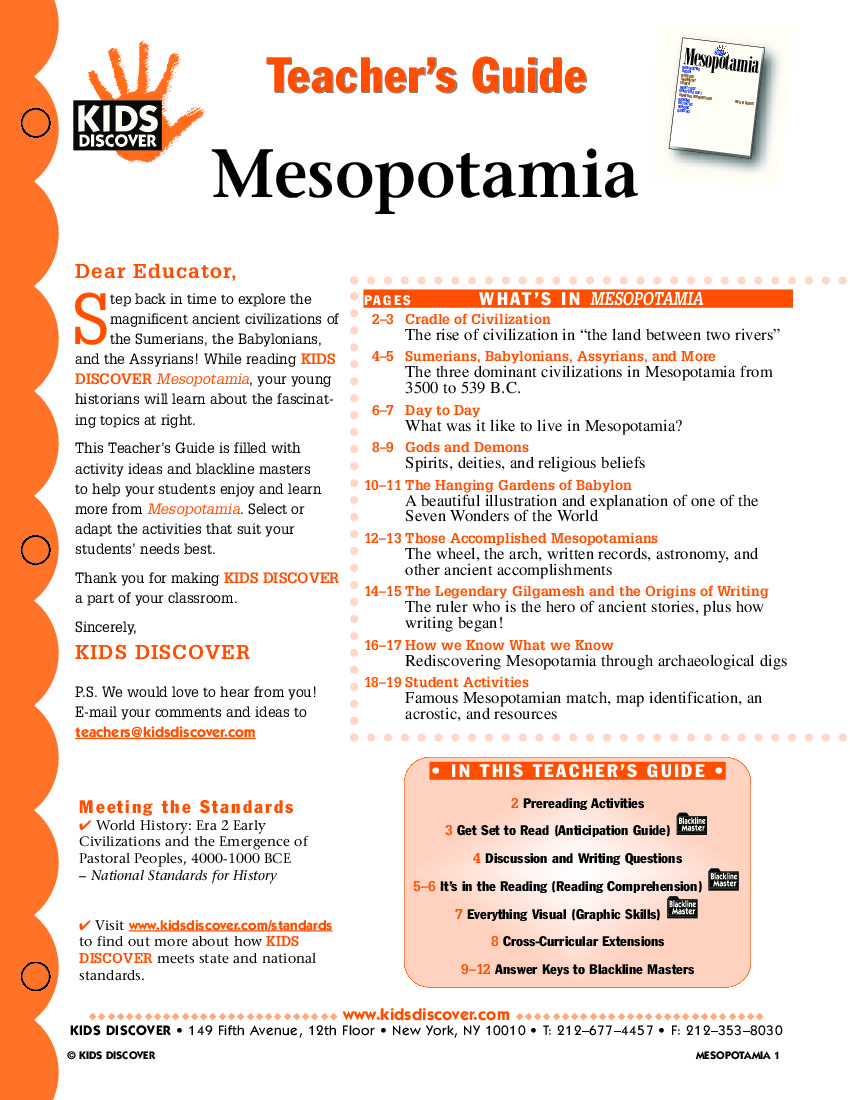
TG_Mesopotamia_088.jpg

We finished up by reading more about the famous Babylonian king, Hammurabi.    

We discussed his code, read some of his laws, and discussed whether we thought they were fair or not.   

Squidy didn't think any of the ones referring to punishing a son were fair.  "Not fair, I'm a son.  I don't like that one".  

Neither liked where the fines were 10x what was stolen, or where death was the punishment for stealing.  "It's fair to be put in a cage if you rob someone, but not fair to be dead".  

The doctor losing a hand if the patient dies:  "depends on which hand?  the one they use or the other one?".  But definitely thought it was not fair if the patient might have died anyway and the doctor didn't do anything wrong.

The kids then took a crack and making up their own codes.  I think in some cases they went in more of a 10 commandments direction.


We took a look at our DK Art book.  It has some really nice pictures of Sumerian artifacts, like the Royal Game of Ur, the Queen's Lyre, and the Standard of Ur; the Hittite Sphinx Gate, and cuneiform tablets.   I am planning a trip to the Metropolitan Museum of Art later in our studies to see the ancient art exhibits, but for now this book is a great resources.

We finished up by adding stickers to our HO wall timeline.  I made up additional stickers for the events mentioned in the curriculum to use as well as the ones that came with the timeline.


We're going to take a week or two to concentrate on Science (and give time to get books from the library) and then we'll be starting on Egypt!


Saturday, February 18, 2017

Ancients: Plans and Cave Painting

We finally started our study of Ancient History!   We are using History Odyssey Level 2, with some modifications/additions, including using both the Kingfisher History Encyclopedia and the Usborne Internet Linked Encyclopedia of World History.  I've had the Usborne for years but bought the Kingfisher because it was supposed to be at a higher level.  Honestly, so far I'm not seeing it.  The reading level seems similar between the two, in fact some entries in the Kingfisher seem to be a lower level.    The main difference is that the Kingfisher starts with Early Humans, while the Usborne covers Prehistory.

We will also be looking for relevant entries in our Art: Over 2500 Works from Cave to Contemporary book.  This book is full of wonderful pictures and tons of information on art.  Since I'm teaching art as a accompaniment to our history studies, this book is perfect.


History Odyssey includes assignments to complete dictation sentences, definitions, fact cards, and/or summaries drawn from the Kingfisher Encyclopedia.  Each unit I'm going to write up my own dictation sentences (or definitions, summaries, fact cards) from the Usborne Encyclopedia and one kid will do the Kingfisher and one will do the Usborne.   All this information will then be put in our Timeline book.  

Our Timeline book is old but mostly empty. It has entries for the family birthdays and events from when we were discussing what is history.   I made it way back when we first started homeschooling.  I don't remember why I set it up the way I did.  I'm sure I read it somewhere, but basically what we are looking at is:
We start at 5 million years ago. 
1 million years ago. 
200,000 years ago
100,000 years ago 
50,000 BC to 5100 BC
5000BC to 4200BC 
4200 BC to 500BC - 100 years per page
500 BC to 1000 AD - 50 years per page
1000AD to 1800 AD - 20 years per page
1800 AD to the present - 10 years per page.

We also have the History Odyssey wall timeline and stickers that we will update as we go along as well.   I like the idea of having both.  The book will allow us to put more detail in each entry, the wall timeline will show the progress of history better.

Before the Holiday craziness, we finished up our Evolution/Prehistory study by learning about early man. We started with studying various Creation Myths using In The Beginning: Creation Stories from Around the World since it seemed like a good transition from evolution.


We then revisited the tail end of our evolution study by reviewing the early man sections in the Kingfisher and Usborne.  History Odyssey begins with the first civilizations but I wanted more of a transition between prehistory and history.

I wrote up some simple dictation sentences for the kids to complete while reading from the encyclopedias.   There were some minor differences in the times given between the Usborne and Kingfisher.  Exact dates are not available when you go that far back. 

I can see already that I may need to use smaller index cards or add extra page flaps.


In addition to the encyclopedias, the kids completed the Ice Age activities from Kids Discover.   We used to receive the print magazines but they don't seem to offer them anymore so I purchased a subscription to the website.  In addition to articles with pictures, diagrams and videos, they offer Teacher's Guides that include quizzes and activities to extend the learning.


and they read a few stories about the time period.


We also took a virtual tour of the cave paintings at Lascaux from this website.

We finished up by doing some cave painting of our own.  I was going to set up a fake cave and have the kids paint the walls inside but we were all getting over various colds/flu (that hit again a week later) so I went simpler.  I use brown paper bags (leaf bags from Walmart), tore off sections and crumbled them up to give them some texture.  Instead of making our own paints from charcoal and oil, I let them use some of our paints.  But only colors that would be possible to find in nature.  I originally gave them only brown, yellow and white to match the colors in the cave paintings we viewed, but they managed to talk me into red, green, and orange.   I allowed them to use their fingers or a stick as a brush.  George did one simple drawing with a stick (a squid of course)....


while Vicki jumped right in with her hands and did an entire sunset scene.


As soon as everyone gets over the latest round of colds/flu, we will continue Ancients by starting History Odyssey with First Civilizations and Monuments.

Saturday, May 14, 2016

Wrapping up the Revolution

We finished up our Revolutionary War study with a trip to Philadelphia and Valley Forge for their homeschool days.  We live about two hours away from Philly, so it's a bit of a shame that I have never been to any of the historical places before.  

We started at the Benjamin Franklin museum in Philly.  This was a small, very interactive museum that talked about the life of Ben Franklin, his inventions and writings.


Learning about the 13 colonies and the "Join or Die" symbol.


The kids loved playing the simulated armonica - a glass harmonica that uses the same principle as running a wet finger around the rim of a glass.


There was a simulated printing press to fill in your name on a poster.


A magic square puzzle...


Skuggs the Squirrel was the museum mascot and appeared in various places.    Franklin was a fan of squirrels and other small animals.


We went and visited the Liberty Bell.


And took a tour of Independence Hall.  When the docent asked everyone "who do you think had a larger impact, George Washington or Benjamin Franklin?"  and explained how he thought it was George Washington, Squidy spoke up and said "I think it's Ben Franklin because, sure if we hadn't won the war we'd be ruled by England right now but without Franklin we wouldn't have all those inventions like light bulbs and glasses and stuff". 

Vicki carried around a small notepad and pencil to make sketches throughout the day, while Squidy was playing with a new "adventure tool" he bought - it had a whistle, a flashlight, a secret compartment, a compass, a thermometer, a mirror and a magnifying glass.  The whistle was easily his favorite part.   Vicki bought a penny whistle and the two of them spent lots of time making beautiful ((@_@)) music together.


Our next stop was Valley Forge for their annual Homeschool Days.  This was a LOT of fun for the kids, although by the end of the day they were getting a bit tired.   Our session wasn't until 2:30pm so in the morning we drove around the Encampment Trail and visited the various sites.


Squidy was not impressed with the bunks in the cabins. "It's just bare wood, how uncomfortable!"  Knowing that there would be a mattress or pad of straw didn't impress him much.   "What if the wood isn't sturdy enough and the top bunk collapses?"  "There's barely any room in between them".

Later on he listed one of the things he learned as "I learned I never want to be a soldier during the Revolutionary War".  I think that's one wish we can be sure is fulfilled.


Darryl the barrel.


Vicki with her penny whistle.   I wouldn't let her play it in the car while I was driving so every time we stopped, she pulled it out to play.


The Memorial Arch


The train station by Washington's Headquarters.


The guard huts by Washington's Headquarters.  The first one had a recording play when you walked in the door that startled Vicki and she came running back out immediately.


Washington's Headquarters, the house he stayed in during the winter of 1777-1778. 


Vicki didn't like the steep stairs leading up to the garret room.


Back at the visitors center, Vicki was surprised to learn they played cards and dice back then.


The official Homeschool Day program started with some lessons on how to line up in formation and various commands, for instance right face, about face, forward march, etc.


Marching up to get their muskets.


After learning how to load their muskets and running through various drills, the squadron marched up to the first huts and went through various informational sessions.
 
They started with an activity on invasive species, where they were each given a colored square and had to stand in a circle.  Each time a season went by, they had to run to a new circle.  If there were any yellow squares in their circle (the invasive species) they had to exchange theirs for a yellow square.  


They learned about the daily rations for a soldier.  Squidy was mostly questioning why the bread was real, but the meat and butter were fake.


Squidy got to try hauling water from the "river" while Vicki carried the "flashlight", then took a turn hauling.


Checking out some of the uniforms and learning why the flat part of the hat went to the left (so it didn't get in the way of the musket over their shoulder).


Squidy got to play the drum announcing it was time to change stations.

 
At the medical station, she started by demonstrating the damage done by a musket ball to the leg.  Squidy was pretty upset "You're showing this stuff to CHILDREN!?!?" and then had to walk away when they started talking about amputation.


We had a great time and it was a perfect wrap-up to our Revolutionary War study.  Next we will move on to Westward Expansion and finish up our current US History with the Civil War.